Kenya’s digital ecosystem is rapidly evolving, driving substantial economic and social changes nationwide. With increasing internet penetration, rising mobile connectivity, and expanding social media usage, Kenya is solidifying its position as one of Africa’s most digitally active nations. This growth offers businesses, policymakers, and digital service providers numerous opportunities to tap into new markets and improve service delivery, while also posing challenges in cybersecurity, infrastructure, and digital literacy.
Internet Penetration and Connectivity
Kenya has made remarkable strides in internet penetration, which now stands at 41% of the population as of 2024. This translates to over 24 million internet users in the country, underscoring the significance of the digital space for social interaction, commerce, education, and entertainment. Mobile networks are pivotal in providing internet access, particularly through affordable data plans and expanding 4G/5G coverage.
Although still present, the rural-urban divide in internet access has narrowed due to increased investments in mobile infrastructure. Rural areas, once digitally isolated, are now more connected, opening up opportunities for local businesses, e-commerce, and access to critical services like health and education.
Mobile Connectivity: The Backbone of Kenya’s Digital Ecosystem
Mobile phones are at the core of Kenya’s digital ecosystem. There are over 64 million mobile connections in Kenya, exceeding the country’s population due to multiple SIM ownership by many users. Mobile devices are not only used for communication but have become essential tools for banking, shopping, and social media interaction. Platforms like M-Pesa, Kenya’s mobile money system, continue to revolutionize the financial landscape, with more Kenyans relying on mobile transactions for daily financial activities.
This heavy reliance on mobile technology also drives demand for enhanced cybersecurity measures. As Kenyans increasingly engage in digital financial transactions, they become more vulnerable to cyber-attacks, making robust cybersecurity systems essential for both businesses and consumers.
Social Media: A Growing Hub for Engagement and Commerce
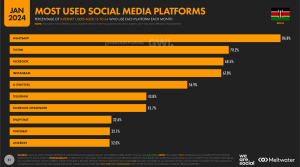
Social media platforms are becoming integral to how Kenyans communicate, entertain, and conduct business online. Here’s a breakdown of the leading platforms:
- Facebook: The largest social media platform in Kenya, Facebook has an advertising reach equivalent to 23.5% of the population, with over 57.5% of internet users actively engaged on the platform. This provides a fertile ground for digital marketing, e-commerce, and content dissemination.
- TikTok: With a user base of 10.6 million people aged 18 and above, TikTok has become one of Kenya’s fastest-growing platforms. Its unique algorithm and emphasis on short-form video content resonate particularly well with Kenya’s younger, creative demographic.
- YouTube: YouTube is used by 9.79 million Kenyans, making it a dominant platform for video content, learning, and entertainment. With a growing base of content creators, Kenya’s YouTube community is contributing significantly to local content production and digital marketing.
- Instagram: Instagram is also growing in popularity, with 3.05 million users as of 2024. The platform’s visually-driven format makes it popular among younger users and influencers, contributing to the rising influencer marketing trend.
- LinkedIn: As Kenya’s workforce becomes more tech-savvy, LinkedIn has seen increasing adoption, with over 4.3 million members using the platform for networking, job hunting, and professional growth.
Opportunities within Kenya’s Digital Ecosystem
Kenya’s rapidly expanding digital ecosystem offers a wealth of opportunities for businesses and service providers, particularly in e-commerce, content creation, fintech, and cybersecurity.
- E-Commerce and Digital Payments The rise in mobile internet access and the success of mobile payment platforms like M-Pesa have made Kenya a hotbed for e-commerce. Small and medium enterprises (SMEs) are increasingly transitioning online, using social media platforms and e-commerce websites to reach wider markets. This shift to digital commerce requires reliable payment systems, cybersecurity measures, and logistic solutions to ensure smooth operations.
- Content Creation and Digital Marketing Kenya’s creative economy is booming, driven by a young, tech-savvy population. Platforms like YouTube, TikTok, and Instagram have created spaces where Kenyan influencers, artists, and content creators can thrive. As social media engagement grows, so does the demand for digital marketing services, making it a prime opportunity for businesses to leverage social media advertising to reach consumers.
- Fintech Innovations Kenya is already a leader in fintech thanks to mobile money services, but the opportunities don’t stop there. As more Kenyans gain access to digital services, fintech solutions around savings, loans, and insurance products are flourishing. Companies that can offer innovative financial products tailored to the needs of mobile users stand to gain in this growing market.
- Cybersecurity Services The rapid digitalization of Kenyan society also brings the challenge of ensuring data security. With millions of internet users, the rise in online transactions, and increasing threats from cybercriminals, the need for comprehensive cybersecurity solutions is more critical than ever. Businesses in the cybersecurity sector have vast opportunities to offer services ranging from data protection, real-time threat monitoring, and user education on cyber risks.
- Digital Literacy and Skills Training As Kenya’s digital economy grows, so does the demand for digital literacy. Both businesses and individuals need training on how to use digital tools effectively and safely. Providing digital literacy programs, particularly in rural areas where such skills are less prevalent, is a growing area of opportunity for educators and tech companies.
Challenges and the Road Ahead
Despite the promising growth, Kenya’s digital ecosystem faces several challenges that need to be addressed:
- Infrastructure Gaps: While mobile connectivity has grown, some rural areas still suffer from poor network quality and slow internet speeds. Expanding reliable 4G and 5G coverage is crucial for bringing these regions fully into the digital economy.
- Cybersecurity Threats: As more Kenyans use digital platforms for banking and commerce, they become targets for cybercriminals. Strengthening cybersecurity frameworks at the national level and increasing awareness among users is vital.
- Regulation and Privacy: As Kenya’s digital space grows, there is a need for clearer regulations around data privacy, internet governance, and the ethical use of AI technologies.
Source: DataReportal